
























Japanese Grammar Is a Set of Patterns
Much of Japanese grammar lives in reusable patterns like 〜てしまう, 〜ばかり and 〜わけではない. How to learn each one with its nuance, register and real examples.
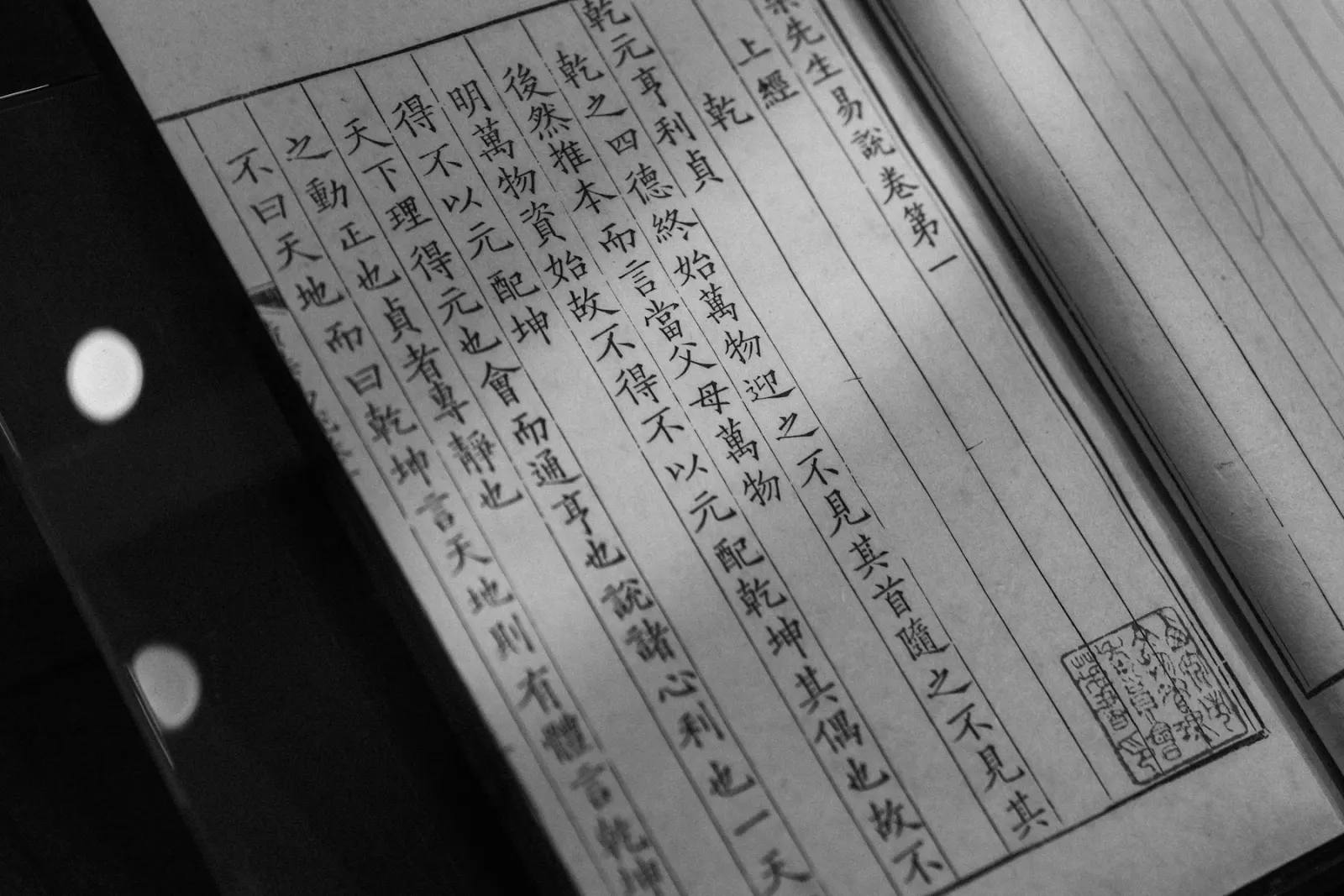
Japanese grammar is less a set of rules than a collection of reusable patterns, each with its own feeling. Learn them one at a time, with their nuance and register, and sentences start to make sense as wholes.
Open a Japanese grammar reference and you will find entries that look like fragments: 〜てしまう, 〜ばかり, 〜わけではない. They are not words and not quite rules. They are patterns: a fixed piece of language that attaches to a verb, adjective or noun in a particular way and adds a particular shade of meaning. Much of intermediate Japanese is learning several hundred of these.
Why patterns, not rules
English grammar is often taught as a system of rules: tenses, articles, word order. Japanese has a small core like that too, the particles and verb forms, but beyond the basics most of the meaning lives in patterns glued onto the end of a clause. The core grammar tells you how to build 忘れる (わすれる, to forget) into 忘れた (forgot). The patterns tell you whether the speaker is annoyed about it, surprised by it, or insisting it was not their fault.
Learning a pattern as a unit has three advantages:
- It matches how you will meet it. Nobody hears "the auxiliary verb しまう attached to the te-form". They hear 忘れちゃった and need to recognise it instantly.
- It carries its nuance with it. A pattern learned inside good example sentences brings its emotional colour along. A rule on its own does not.
- It is testable. You can check whether you know a pattern by choosing it in a sentence, which is exactly the kind of retrieval practice that strengthens memory.
Three patterns up close
〜てしまう: done, and maybe regretted
Attached to the te-form of a verb, しまう has two main uses. The first is completion, often with a sense of "all the way":
宿題を全部やってしまった。 (しゅくだいをぜんぶやってしまった。) "I got all my homework done."
The second, and more common in conversation, is regret or something happening against your wishes:
財布を忘れてしまいました。 (さいふをわすれてしまいました。) "I (went and) forgot my wallet."
English has no neat equivalent, which is exactly why the pattern is worth learning with examples. In casual speech it contracts: てしまう becomes ちゃう, and でしまう becomes じゃう. 忘れてしまった becomes 忘れちゃった (わすれちゃった), and 飲んでしまった (のんでしまった, drank it all) becomes 飲んじゃった (のんじゃった). You will hear the short forms far more often than the long ones among friends, and almost never in a formal email.
〜ばかり: nothing but, or only just
ばかり has several uses that share a sense of "exclusively" or "barely". After a noun, it means "nothing but", often with a hint of complaint:
弟はゲームばかりしている。 (おとうとはゲームばかりしている。) "My little brother does nothing but play games."
Compare だけ, which also means "only" but is neutral. 野菜だけ食べる (やさいだけたべる) simply states that someone eats only vegetables; お菓子ばかり食べる (おかしばかりたべる) suggests they eat far too many sweets.
After the past form of a verb, ばかり means something has only just happened:
日本に来たばかりです。 (にほんにきたばかりです。) "I've only just arrived in Japan."
Same word, two quite different feelings, and the grammar around it tells you which one you are looking at.
〜わけではない: it's not that...
わけではない softens or corrects an assumption. It does not deny something outright; it says the listener's conclusion goes too far.
肉が嫌いなわけではありません。 (にくがきらいなわけではありません。) "It's not that I dislike meat." (The speaker has another reason for not eating it.)
高いものがいつもいいわけではない。 (たかいものがいつもいいわけではない。) "Expensive things aren't necessarily always better."
Notice the connection: な-adjectives keep their な before わけ (嫌いなわけ), while verbs and い-adjectives attach in their plain form. In conversation, ではない often becomes じゃない: 嫌いなわけじゃない.
A pattern learned inside a sentence brings its feeling with it. A rule on its own does not.
Nuance and register
Two patterns can translate the same way and still not be interchangeable. The difference may be emotional, like だけ and ばかり, or it may be register: how formal the situation is. Japanese marks register heavily. The same idea can be expressed with a casual contraction, a neutral です/ます ending or a stiff written form, and choosing the wrong one sounds odd in a way that a grammar mistake sometimes does not.
That is why the best way to study a pattern is through several short examples that show it in different situations: one casual, one polite, one where it means something slightly different. Each example narrows down what the pattern really does.
Why spacing matters for grammar
Grammar patterns are easy to understand on the day and easy to lose a week later. The research on memory is consistent about why. Ebbinghaus's forgetting curve shows how quickly new material fades without review. The spacing effect shows that revisiting it after growing gaps produces much more durable memory. And interleaving, mixing different types of problems rather than practising one type in a block, helps you learn to tell similar items apart, as studies by Kornell and Bjork and by Rohrer and Taylor have shown. For grammar, that means meeting ばかり again next week in a mixed set, alongside だけ and other patterns, not twenty times in a row today.
How the BitSize Grammar app works
BitSize Japanese Grammar teaches one pattern per lesson, arranged by JLPT level from N4 up to N1. Each lesson has four steps.
- Learn. The pattern's form, a one-line description of how it feels, a focus sentence, a small diagram of its shape in time (a point, a span, or a sequence of phases) and a short table showing how it attaches to verbs, adjectives or nouns.
- Examples. Several sentences grouped by the pattern's different uses, each with furigana, English, audio and tappable vocabulary. You can also read them aloud and get a similarity score from your browser's speech recognition.
- Quiz. Five multiple-choice questions: what the pattern means in a sentence, which form fits, which particle belongs, and sometimes one you answer by ear. Four out of five passes the lesson and permanently opens the next one.
- Recap. The rule in brief and a summary of your result, including anything you missed and why.
Once passed, a pattern's questions return in the Japanese daily review: ten mixed questions a day, drawn from every app in the track, spaced so that shaky patterns come back sooner. Each lesson shows its strength from Learning to Mastered, and patterns that are fading are marked "to refresh". If you already know a level, a placement check lets you test out and start at the next one.
This week
Try this: pick one pattern, such as 〜てしまう. Write three sentences about your own week: one about finishing something, one about a small mistake, and one casual version using ちゃう. Read them aloud. In three days, write one more without looking at your notes.
If you use the app, do one pattern a day and the daily review, and spend real time in the Examples step: read each sentence aloud before looking at the English. The quiz checks that you understood. The examples are where the feeling of the pattern settles in.